

What is the repetitive - surge - handling ability of Class I MOV?
May 20, 2025
Hey there! As a supplier of Class I MOVs, I often get asked about the repetitive - surge - handling ability of these little but mighty components. So, I thought I'd sit down and share some insights on this topic.
First off, let's quickly understand what a Class I MOV is. A Class I MOV, or Metal Oxide Varistor, is a type of voltage - dependent resistor. It's designed to protect electrical circuits from over - voltage events, like those caused by lightning strikes or power surges. When the voltage across the MOV exceeds a certain threshold, its resistance drops dramatically, allowing it to divert the excess current away from the sensitive components in the circuit.
Now, the repetitive - surge - handling ability is a crucial factor when it comes to the performance and reliability of Class I MOVs. In real - world applications, electrical systems can be subjected to multiple surges over time. For example, in an area prone to thunderstorms, a building's electrical system might experience several lightning - induced surges during a single storm season.
The repetitive - surge - handling ability of a Class I MOV refers to its capacity to withstand and handle a series of surges without significant degradation in its performance. When a surge hits the MOV, it absorbs a large amount of energy. If the MOV is exposed to too many surges or surges that are too large, it can start to wear out. This wear and tear can lead to a change in its electrical characteristics, such as an increase in leakage current or a decrease in its clamping voltage.
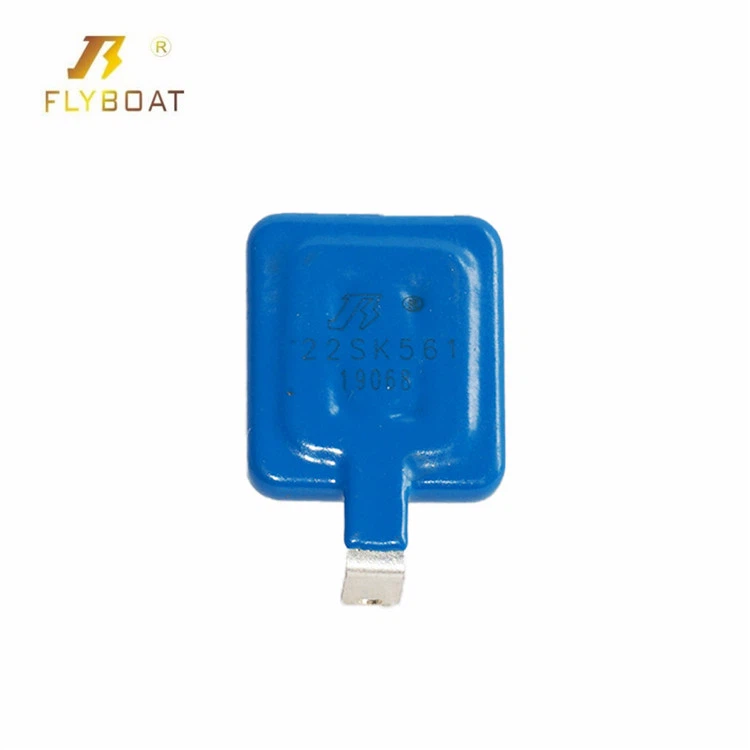

One of the key factors that affect the repetitive - surge - handling ability is the physical construction of the MOV. Our Bare Disc Varistors are a great example. These varistors are made with high - quality metal oxide materials that are carefully formulated and processed. The disc shape provides a large surface area for heat dissipation, which is essential when dealing with the high - energy surges. When a surge occurs, the energy is dissipated as heat, and if the heat can't be effectively removed, it can cause the MOV to overheat and fail.
Another important aspect is the manufacturing process. We use advanced manufacturing techniques to ensure the consistency and quality of our Class I MOVs. This includes precise control of the doping levels in the metal oxide material, which affects the electrical properties of the MOV. By maintaining tight control over the manufacturing process, we can produce MOVs that have a more predictable and stable performance when it comes to handling repetitive surges.
Let's talk about some real - world testing. We conduct a series of tests on our Class I MOVs to evaluate their repetitive - surge - handling ability. One common test is the multiple - surge test, where we subject the MOV to a series of surges with a specific amplitude and time interval. We measure the electrical characteristics of the MOV before and after each surge to see how it responds.
For instance, we might start by testing a MOV with a series of 100 - amp surges, each separated by a few seconds. After each surge, we measure the leakage current and the clamping voltage. If the leakage current starts to increase significantly or the clamping voltage deviates from the specified range, it indicates that the MOV is starting to degrade.
We also consider the energy absorption capacity of the MOV. The energy absorbed during a surge is related to the product of the voltage, current, and the duration of the surge. A Class I MOV with a higher energy absorption capacity is generally better at handling repetitive surges because it can store and dissipate more energy without being damaged.
Now, why is all this important for you? Well, if you're using Class I MOVs in your electrical systems, you want them to be reliable. A MOV that can't handle repetitive surges effectively might fail prematurely, leaving your valuable equipment unprotected. This could lead to costly repairs or even downtime for your business.
Our MOV Varistor For Spd is specifically designed with high repetitive - surge - handling ability in mind. Whether you're protecting a small electronic device or a large industrial electrical system, our MOVs can provide the reliable protection you need.
If you're in the market for Class I MOVs and want to learn more about their repetitive - surge - handling ability or have any other questions, don't hesitate to reach out. We're here to help you find the right solution for your specific application. Whether you're an electrical engineer, a system integrator, or a procurement professional, we can work with you to ensure that you get the best - performing MOVs for your needs.
In conclusion, the repetitive - surge - handling ability of Class I MOVs is a critical aspect of their performance. It's determined by factors like the physical construction, manufacturing process, and energy absorption capacity. By choosing high - quality Class I MOVs from a reliable supplier, you can ensure the long - term protection of your electrical systems. So, if you're looking for a trustworthy source of Class I MOVs, give us a shout. We're ready to have a chat and discuss how we can meet your requirements.
References
- Manufacturer's technical documentation on Class I MOVs
- Industry standards related to surge protection devices and MOVs
- Research papers on the performance and reliability of metal oxide varistors