

What is the self - healing ability of a MOV varistor for SPD?
Nov 13, 2025
Yo, folks! As a supplier of MOV varistors for SPD (Surge Protective Devices), I've been getting a bunch of questions about the self - healing ability of MOV varistors. So, I thought I'd sit down and write this blog to clear things up.
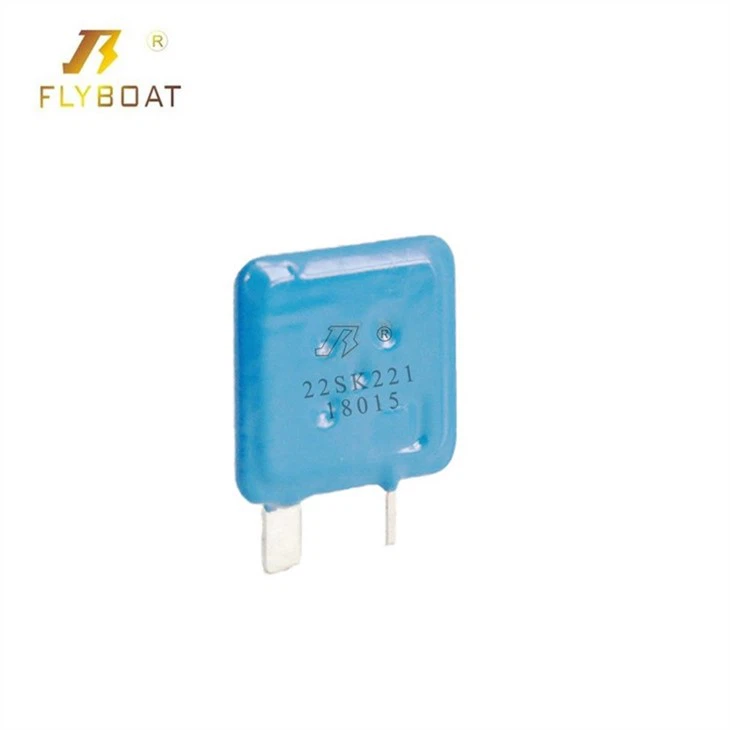
First off, let's talk about what MOV varistors are. MOV stands for Metal Oxide Varistor. These little guys are super important in SPDs. They're like the bodyguards of electrical circuits. When there's a sudden surge of voltage, an MOV varistor steps in and diverts the excess energy away from the sensitive components in the circuit. This helps prevent damage to things like your fancy electronics at home or the high - tech equipment in industrial settings.
Now, the self - healing ability. It's a pretty cool feature. You see, an MOV varistor is made up of a ceramic material with metal oxide grains. Under normal operating conditions, the MOV has a high resistance. It just kind of sits there, minding its own business, not really affecting the flow of current in the circuit. But when a voltage surge hits, the resistance of the MOV drops significantly. It becomes a low - resistance path, allowing the excess current to flow through it and away from the rest of the circuit.
Here's where the self - healing part comes in. Once the voltage surge is over, the MOV varistor is supposed to go back to its high - resistance state. It's like it heals itself from the "shock" of the surge. This is crucial because if it doesn't go back to its high - resistance state, it can cause a short - circuit in the system, which is a huge no - no.
But how does this self - healing actually work? Well, it all boils down to the physics of the metal oxide grains inside the MOV. When the voltage surge occurs, the electric field across the MOV causes some of the electrons in the metal oxide grains to become free. This is what causes the drop in resistance. Once the surge is gone, the electric field weakens, and those free electrons go back to their original positions within the grains. As a result, the MOV regains its high - resistance state.
However, it's important to note that the self - healing ability of an MOV varistor isn't infinite. Every time an MOV experiences a voltage surge, there's a bit of wear and tear. Over time, repeated surges can cause permanent damage to the MOV. The metal oxide grains can get physically altered, and the MOV may not be able to fully heal itself. This is known as degradation.
There are a few factors that can affect the self - healing ability of an MOV varistor. One of the main factors is the magnitude of the voltage surge. A really big surge can cause more damage than a small one. For example, a lightning strike can produce a massive voltage surge that might be too much for the MOV to handle. In such cases, the MOV may be completely destroyed and won't be able to self - heal at all.
The frequency of surges also matters. If an MOV is constantly exposed to voltage surges, it doesn't have enough time to fully recover between surges. This can speed up the degradation process. Temperature is another factor. High temperatures can make the MOV more prone to damage and can reduce its self - healing ability.
As a supplier, we've put a lot of effort into developing MOV varistors with better self - healing capabilities. We use high - quality materials and advanced manufacturing processes to ensure that our MOVs can withstand multiple surges and still maintain their self - healing properties.
For instance, our MOV DC series is designed to handle direct current applications. These MOVs are built with a special composition of metal oxides that enhance their self - healing ability. They can quickly recover from voltage surges and continue to protect your circuits.
Our High Energy Suppressor Discs are another great option. These are designed to handle high - energy surges. They have a larger physical size, which allows them to dissipate heat more effectively. This helps in maintaining their self - healing ability even under extreme conditions.
And if you're looking for a reliable MOV for general - purpose applications, our 32D Metal Oxide Varistor is a top choice. It's been tested rigorously to ensure that it can self - heal after multiple surges.
So, if you're in the market for MOV varistors for your SPDs, you want to make sure you choose ones that have good self - healing capabilities. You don't want to end up with MOVs that degrade quickly and leave your circuits unprotected.
We're here to help you find the right MOV varistors for your needs. Whether you're a small business looking to protect your office equipment or a large industrial company with complex electrical systems, we've got the products and the expertise to assist you.

If you're interested in learning more about our MOV varistors or want to discuss your specific requirements, don't hesitate to reach out. We're always happy to have a chat and see how we can help you safeguard your electrical systems. Let's work together to ensure that your circuits are well - protected from voltage surges.
References
- Some basic textbooks on electrical engineering that cover the principles of MOV varistors
- Industry research papers on the performance and self - healing abilities of MOV varistors