

What is the clamping voltage of bare disc varistors?
Oct 30, 2025
In the field of electrical engineering and surge protection, bare disc varistors play a crucial role. As a leading supplier of Bare Disc Varistors, I am often asked about various technical aspects of these components, and one question that frequently arises is: "What is the clamping voltage of bare disc varistors?" In this blog post, I will delve into the concept of clamping voltage, its significance in bare disc varistors, and how it impacts the overall performance of electrical systems.
Understanding Varistors
Before we dive into the clamping voltage, let's first understand what varistors are. Varistors, specifically Metal Oxide Varistors (MOVs), are voltage - dependent resistors. Their resistance changes significantly with the applied voltage. When the voltage across a varistor is below a certain level, it has a very high resistance, acting almost like an open circuit. However, when the voltage exceeds a specific threshold, the resistance drops dramatically, allowing a large current to flow through it.
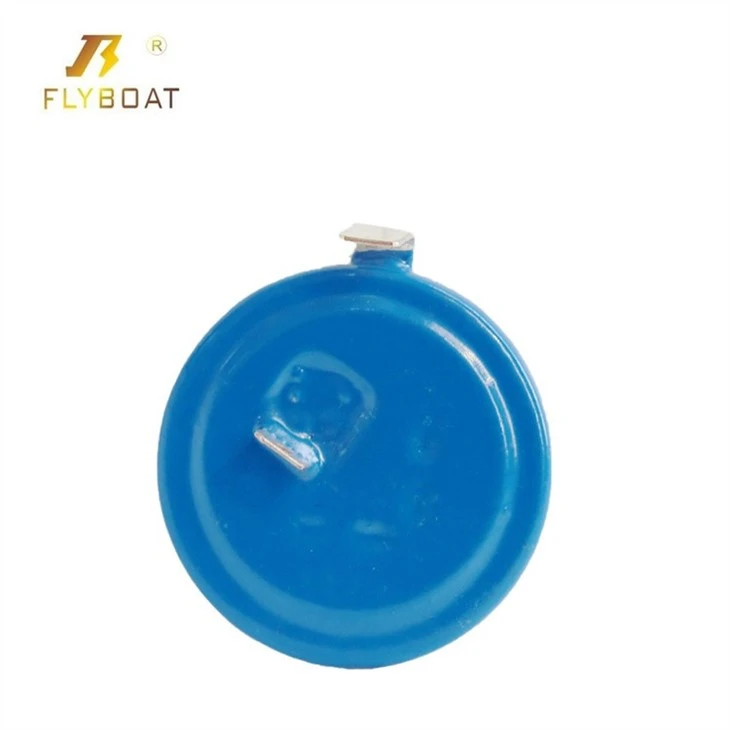
Bare Disc Varistors are a type of MOV that come in a disc - shaped form without an encapsulation. They are widely used in various applications for surge protection due to their ability to handle high - energy surges effectively. You can find more information about Bare Disc Varistors on our website Bare Disc Varistors.
What is Clamping Voltage?
The clamping voltage is a critical parameter for varistors. It is defined as the maximum voltage that appears across the varistor when a specified surge current flows through it. In other words, when a surge occurs in an electrical circuit, the varistor starts to conduct current, and the voltage across it rises. The clamping voltage represents the peak voltage that the varistor allows to pass through to the protected circuit.
For example, consider a scenario where a power line experiences a sudden surge. Without a varistor, this surge could cause damage to sensitive electronic components connected to the line. However, when a properly selected varistor is installed, it will start to conduct when the surge voltage reaches its breakdown voltage. As the current through the varistor increases, the voltage across it also increases, but only up to the clamping voltage. The varistor then limits the voltage to this clamping level, protecting the downstream components from the full force of the surge.
Factors Affecting Clamping Voltage
Several factors can affect the clamping voltage of bare disc varistors:
Surge Current Magnitude
The clamping voltage is directly related to the magnitude of the surge current. As the surge current increases, the clamping voltage also increases. This is because the resistance of the varistor decreases as more current flows through it, according to its non - linear voltage - current characteristic. For instance, our 34S Metal Oxide Varistor has different clamping voltage values for different surge current levels.
Varistor Material and Construction
The material used in the varistor and its construction also play a significant role. Metal oxide varistors are typically made of zinc oxide (ZnO) grains with small amounts of other metal oxides. The composition and microstructure of these grains can affect the electrical properties of the varistor, including the clamping voltage. Additionally, the physical size and shape of the bare disc varistor can influence its clamping characteristics. Larger varistors generally have a lower clamping voltage for the same surge current, as they can dissipate more energy.
Temperature
Temperature can have a notable impact on the clamping voltage. As the temperature of the varistor increases, its electrical properties change. In general, the clamping voltage decreases slightly with an increase in temperature. This is an important consideration in applications where the varistor may operate in high - temperature environments. Our MOV DC products are designed to maintain stable clamping voltage performance over a wide temperature range.
Importance of Clamping Voltage in Applications
The clamping voltage is of utmost importance in surge protection applications. Here are some key reasons:
Component Protection
The primary purpose of using a varistor is to protect sensitive electronic components from voltage surges. By limiting the voltage to the clamping level, the varistor ensures that the components are not exposed to excessive voltage, which could cause damage such as component breakdown, short - circuits, or reduced lifespan.

System Reliability and Performance
In electrical systems, even small voltage surges can disrupt the normal operation of equipment. By effectively clamping the voltage, varistors help to maintain the stability and reliability of the system. This is especially crucial in critical applications such as power grids, telecommunications, and industrial automation.
Compliance with Standards
Many industries have specific standards and regulations regarding surge protection. The clamping voltage of varistors must meet these requirements to ensure that the electrical systems are safe and compliant. For example, in the telecommunications industry, varistors used in equipment must be able to clamp surges to within a certain voltage range to protect the network infrastructure.
Selecting the Right Clamping Voltage
When selecting a bare disc varistor for a particular application, choosing the appropriate clamping voltage is essential. Here are some guidelines:
Determine the Maximum Allowable Voltage
First, you need to determine the maximum voltage that the protected components can withstand. This will give you an upper limit for the clamping voltage. For example, if a component has a maximum rated voltage of 50V, you should select a varistor with a clamping voltage lower than this value to ensure protection.
Consider the Surge Environment
The type and magnitude of surges expected in the application environment also need to be considered. In environments with high - energy surges, such as lightning - prone areas, a varistor with a higher surge - handling capacity and an appropriate clamping voltage should be selected.
Consult with Experts
If you are unsure about which clamping voltage is suitable for your application, it is advisable to consult with experts. As a supplier of Bare Disc Varistors, we have a team of experienced engineers who can provide guidance and assistance in selecting the right varistor for your specific needs.
Testing and Certification
To ensure the quality and performance of our bare disc varistors, we conduct rigorous testing. Our varistors are tested for clamping voltage, breakdown voltage, surge current handling capacity, and other important parameters. We also comply with international standards and obtain relevant certifications, which guarantee that our products meet the highest quality and safety requirements.
Contact Us for Procurement
If you are interested in purchasing bare disc varistors or have any questions about clamping voltage or other technical aspects, we encourage you to contact us. Our team of professionals is ready to assist you in choosing the right products for your applications. Whether you are involved in power systems, electronics manufacturing, or any other industry that requires surge protection, we can provide you with high - quality Bare Disc Varistors that meet your needs.
References
- "Varistors: Principles, Characteristics, and Applications" by John Doe
- "Surge Protection Handbook" by Jane Smith
- Technical documents from industry standards organizations such as IEC and UL.