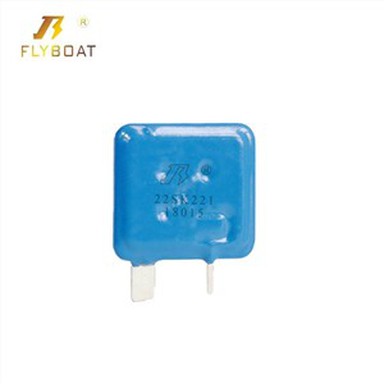
Power Line SPD
Protect electric system and on-loading electrical apparatus from thunder and instantaneous over-voltage;
- Fast Delievery
- Quality Assurance
- 24/7 Customer Service
Product Introduction
Surge Protective Device SPD DC 500V 800V 1000V 2P DC1000V 20KA~40KA Low-voltage Arrester House din rail 2 Poles Protector.
Product details
● 40kA surge protector
● Price:2.5-10 USD
Description
Ulta series surge protector device(hereinafter referred to as SPD) is used for power supply system such as IT,TT,TN-C,TN-S,TN-CS, etc. for low-voltage AC distribution system, for indirect lightning and direct lightning or other A surge of transient overvoltage is protected. The SPD has a common mode(MC)protection. The SPD complies with GB/T18802.1/IEC61643-II.
● Electric ratings: 230/400V, AC50/60Hz, 3-phase;
● Application: Protect electric system and on-loading electrical apparatus from thunder and instantaneous over-voltage;
● Standard: IEC/EN 61643-1
● Number of poles: 1, 2,3, 4;
● Electric ratings: 230/400V, AC50/60Hz;
● Application: Protect electric system and on-loading electrical apparatus from thunder and instantaneous over-voltage;
● Electric ratings: Single phase power distribution and control system of AC50/60Hz, 230V;
● Short circuit current: up to 10kA (8/20μs);
● Application: Protect electric system and on-loading electrical apparatus from lightening and instantaneous over-voltage;
Technical parameters

SPD Categories or Types
The two main types of SPDs are voltage limiting and voltage switching components. Voltage limiting components change in impedance as the voltages rise, resulting in clamping the transient voltage. Voltage switching components “turn on” once a threshold voltage is exceeded and immediately drop to a low impedance. Most systems today incorporate both component types together to aggregate the strengths and limit the weaknesses of each individual part.
Examples of voltage limiting components are metal oxide varistors (MOVs) and transient voltage suppression (TVS) diodes. Voltage switching components include gas discharge tubes (GDTs) and spark gaps.
How to Compare SPD Categories
Surge components can be compared in how they perform according to the following factors.
Response Time
The response time of a given component simply means how quickly the component reacts when the surge threshold is surpassed. Voltage limiting components—TVS diodes, in particular—have faster response times than voltage switching components (i.e. spark gaps and GDTs).
Follow-On Current
This occurrence is limited to voltage switching devices. Follow-on current occurs when a surge protective device fails to “turn off’ (i.e. return to a high impedance state) following the transient event due to the low voltage drop across the component. This allows current to continue to flow through the device during normal operation.
This phenomenon is less of a concern in AC systems, as the zero crossing allows the component to turn-off and return to a high impedance state. However, a DC system using voltage-switching devices requires further consideration.
Let-Through Voltage
In the event of a surge, the let-through voltage is the amount of voltage the component allows to reach the connected equipment. For let-through voltage, diodes limit voltage the best and keep it the lowest, but that advantage is restricted because diodes are not as effective at handling larger surge currents.
One component not mentioned above as being one of the best or worst in any of these three areas is a MOV, because MOVs are generally considered serviceable in every category, operating as a jack-of-all-trades, but not the best in a single one.
Note that most SPD products on the market today are hybrid designs that are a combination of multiple surge components. These products balance the pros and cons of each individual component to provide facilities with balanced protection against various types of surges.
Surge Protective Device Performance Features to Know
Knowing individual surge components is helpful to understand, but what drives the standards for SPDs are performance aspects or features for each device.
After identifying the power distribution system to which the SPD is to be connected, one should compare different available devices by the following:
1. Maximum Continuous Operating Voltage (MCOV). The MCOV is the maximum voltage the device can withstand and continue to properly operate. Generally, the MCOV should be at least 25% above the nominal supply voltage, but is driven by the relevant standards. For example, nVent ERICO SPDs designed for 120 nominal volt devices have an MCOV of 170, and for 240 nominal volt systems the SPD’s MCOV is 275.
2. Voltage Protection Rating (VPR) or Voltage Protection Level (Up). Voltage protection rating and voltage protection level are ratings defined by UL and IEC, respectively, that relate to the let-through voltage of the device. UL 1449 includes a test that applies a 6kV/3kA combination waveform to the device and measures the voltage let through, determining the voltage protection rating (VPR). IEC 61643-11 has a similar test and refers to it as voltage protection level (Up).
3. Nominal Discharge Current (In) Rating. Defined as the peak value of a current that can be conducted through the SPD with a waveshape of 8/20μs where the SPD still functions after 15 applied surges. Per UL 1449, manufacturers must choose a nominal discharge current from a predefined list (3ka, 5kA, 10kA or 20kA) for this test.
4. Indication Status. The status indicator—which may be a mechanical indicator, LED or remote alarm—provides a simple Go/No-Go indicator. Surge rating is something many consider a key factor for SPD specification. However:
5. Surge Current Capacity or Maximum Surge Rating. Manufacturers often list these ratings as an indication of either lifetime endurance of the device, or the single one-time maximum surge current that the device can handle. Although these ratings appear on many manufacturer websites and datasheets, UL or IEEE does not define these ratings. This allows each manufacturer to create their own testing requirements (if any) ultimately making them less reliable indicators of performance.


Hot Tags: power line spd, suppliers, manufacturers, factory, customized, wholesale, price, cheap, pricelist, quotation, free sample, Power Line SPD, Solar System 1000V, Surge Protectors Signal Systems, DC MOV For PV System, 1000v Dc Spd