

How do new materials affect the performance of Metal Oxide Varistors?
Jan 09, 2026
New materials have always been at the forefront of technological innovation, and their impact on the performance of Metal Oxide Varistors (MOVs) is profound. As a supplier of MOVs, I have witnessed firsthand how the introduction of new materials can revolutionize the capabilities of these essential components. In this blog, I will explore the various ways in which new materials affect the performance of MOVs, highlighting the benefits and challenges associated with their use.
1. Understanding Metal Oxide Varistors
Before delving into the impact of new materials, it's important to understand what MOVs are and how they function. MOVs are voltage-dependent, nonlinear resistors that are widely used for surge protection in electrical and electronic systems. They are typically made from a ceramic material composed of zinc oxide (ZnO) grains surrounded by a matrix of other metal oxides, such as bismuth oxide (Bi₂O₃), antimony oxide (Sb₂O₃), and cobalt oxide (Co₃O₄).
The unique property of MOVs is their ability to change their resistance in response to the applied voltage. At normal operating voltages, MOVs have a high resistance, allowing only a small leakage current to flow. However, when a surge voltage exceeds a certain threshold, known as the breakdown voltage, the MOV's resistance drops significantly, diverting the surge current away from the protected equipment. This characteristic makes MOVs an effective and reliable solution for protecting sensitive electronic devices from voltage spikes and transient overvoltages.
2. Impact of New Materials on Electrical Performance
2.1 Breakdown Voltage and Energy Handling Capacity
One of the primary ways in which new materials can affect the performance of MOVs is by altering their breakdown voltage and energy handling capacity. By incorporating new metal oxides or dopants into the ZnO-based ceramic material, it is possible to adjust the electrical properties of the MOV, such as its breakdown voltage, clamping voltage, and energy absorption capability.
For example, the addition of certain rare earth elements, such as lanthanum (La) or neodymium (Nd), can improve the nonlinearity of the MOV's voltage-current characteristic, resulting in a lower clamping voltage and a higher energy handling capacity. This allows the MOV to more effectively suppress voltage surges and protect the connected equipment from damage.
2.2 Leakage Current and Aging Characteristics
Another important aspect of MOV performance is its leakage current and aging characteristics. Leakage current is the small current that flows through the MOV at normal operating voltages, and it can have a significant impact on the power consumption and reliability of the protected system. New materials can be used to reduce the leakage current of MOVs, improving their energy efficiency and long-term stability.
In addition, the aging characteristics of MOVs, which refer to the changes in their electrical properties over time, can also be influenced by the choice of materials. By using more stable and durable materials, it is possible to extend the lifespan of MOVs and reduce the risk of premature failure.
3. Impact of New Materials on Physical and Mechanical Properties
3.1 Thermal Conductivity and Heat Dissipation
The thermal conductivity of MOVs is an important factor in determining their ability to dissipate heat generated during surge events. High thermal conductivity allows the MOV to quickly transfer heat away from the active region, preventing overheating and thermal damage. New materials with improved thermal conductivity, such as aluminum nitride (AlN) or silicon carbide (SiC), can be used to enhance the heat dissipation capabilities of MOVs, increasing their reliability and performance under high-power conditions.
3.2 Mechanical Strength and Shock Resistance
The mechanical strength and shock resistance of MOVs are also crucial for their reliable operation in harsh environments. New materials can be used to improve the mechanical properties of MOVs, making them more resistant to physical damage and vibration. For example, the use of advanced ceramic materials or composite structures can increase the hardness and toughness of MOVs, reducing the risk of cracking or breaking under mechanical stress.
4. Examples of New Materials in MOV Applications
4.1 Nanocomposite Materials
Nanocomposite materials, which consist of a matrix material filled with nanoparticles, have shown great potential for improving the performance of MOVs. By incorporating nanoparticles of metal oxides or other functional materials into the ZnO-based ceramic matrix, it is possible to enhance the electrical, thermal, and mechanical properties of the MOV. For example, the addition of carbon nanotubes (CNTs) or graphene nanoparticles can improve the electrical conductivity and thermal conductivity of the MOV, while also increasing its mechanical strength.
4.2 Multilayer Structures
Multilayer structures, which consist of multiple layers of MOV material stacked together, can also be used to improve the performance of MOVs. By using different materials or doping levels in each layer, it is possible to optimize the electrical and thermal properties of the MOV for specific applications. For example, a multilayer MOV with a high-energy absorption layer and a low-leakage current layer can provide both excellent surge protection and energy efficiency.
5. Challenges and Considerations in Using New Materials
While new materials offer many potential benefits for improving the performance of MOVs, there are also several challenges and considerations that need to be addressed. One of the main challenges is the cost and availability of new materials. Some new materials may be expensive or difficult to obtain, which can limit their widespread use in MOV production.
In addition, the compatibility of new materials with existing manufacturing processes and equipment is also an important consideration. New materials may require different processing conditions or techniques, which can increase the complexity and cost of production.
Another challenge is the need for thorough testing and validation of new materials. Before new materials can be used in commercial MOV products, they need to be extensively tested to ensure their reliability and performance meet the required standards. This can involve a combination of electrical, thermal, mechanical, and environmental testing to evaluate the long-term stability and durability of the MOVs.
6. Conclusion and Call to Action
In conclusion, new materials have the potential to significantly enhance the performance of Metal Oxide Varistors in terms of their electrical, thermal, and mechanical properties. By using new materials, it is possible to improve the breakdown voltage, energy handling capacity, leakage current, and aging characteristics of MOVs, as well as their thermal conductivity, heat dissipation, mechanical strength, and shock resistance.
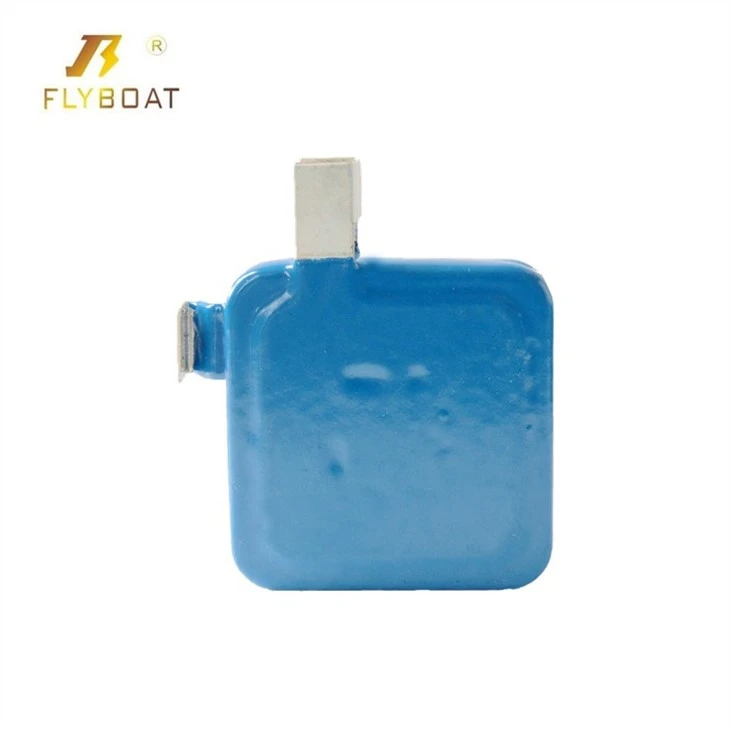

As a supplier of MOVs, we are constantly exploring the use of new materials and technologies to develop innovative and high-performance products that meet the evolving needs of our customers. We offer a wide range of MOV products, including Bare Disc Varistors, 34S Metal Oxide Varistor, and Metal Oxide Square Disc Varistors, which are designed to provide reliable surge protection for a variety of applications.
If you are interested in learning more about our MOV products or discussing your specific surge protection requirements, please do not hesitate to contact us. We look forward to working with you to find the best solution for your needs.
References
- Gupta, T. K., & Kulkarni, S. V. (2004). Metal Oxide Varistors: Fundamentals and Applications. Springer Science & Business Media.
- Chen, C. H., & Tsai, C. C. (2010). A review of ZnO varistors. Journal of Materials Science, 45(2), 291-311.
- Wang, X., & Zhang, L. (2015). Recent progress in the development of metal oxide varistors. Journal of Materials Science: Materials in Electronics, 26(12), 9503-9513.